Author name: nd@ncdcom.com

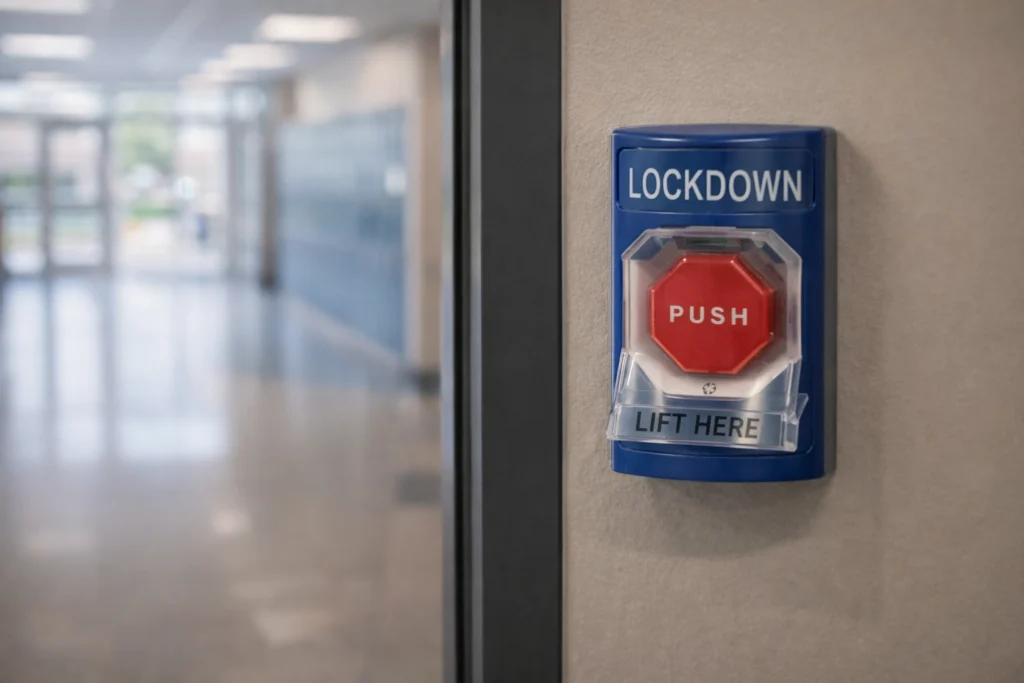
Lockdown button on a school hallway wall, ready for emergency use
Blogs

Recognizing Gaps in Public School Lockdown Systems on Long Island

Most Long Island school districts already have some kind of lockdown setup. There are written plans, drills, and technology in place. But having something on paper or bolted to a wall is not the same as having a system that actually works when people are stressed and the building is busy.

Real school life is messy. Bells are ringing, staff are out sick, substitutes are trying to learn names, and after-school groups are spread across gyms and fields. A public school lockdown system in Long Island has to work in all of those situations, not just in a calm first-period drill.

Late winter is when many districts start planning summer work. That makes this a good time to ask a simple question: where would our lockdown process fail if today’s drill were a real incident? In this article, we will walk through common gaps we see in Long Island schools and share practical steps to close them without pushing any one brand or product.
Blogs

Common School Visitor Management Mistakes on Long Island

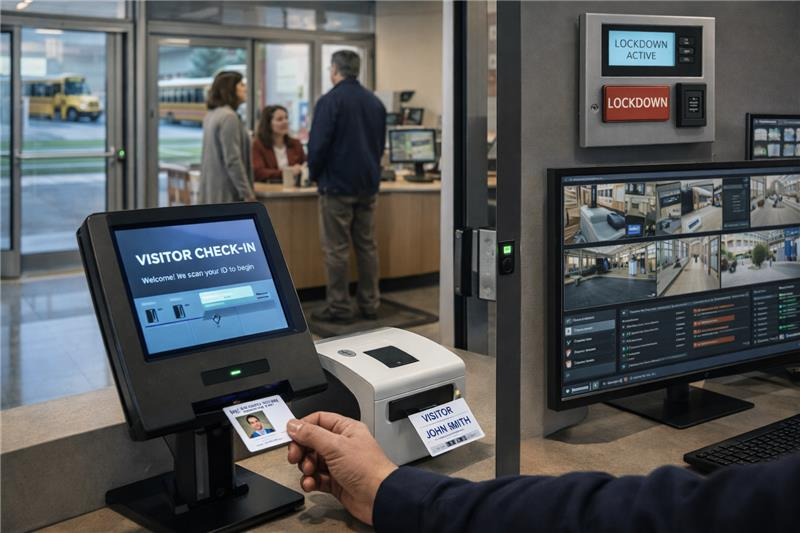
Strong visitor controls are now part of everyday school life on Long Island. Front offices handle a steady stream of parents, delivery drivers, contractors, and community visitors, often all at the same time. While staff are answering phones and helping students, they are also expected to make quick decisions about who comes into the building, where they can go, and how long they can stay.

A school visitor management system is not just a kiosk, a paper sign-in sheet, or a plastic badge. It is the full set of tools and steps your staff use to greet, verify, track, and, when needed, restrict visitors. That includes your main entrance hardware, camera views, ID checks, badges, alerts, and the rules your team follows every time someone asks to come inside.

On Long Island, many districts searching for a school visitor management system want to answer a few basic questions:

– How do we know who is in the building right now?
– How do we keep visitors in the right areas and out of restricted spaces?
– How do we give parents and community members a smooth, respectful experience?

In our work with Long Island schools, we see that the most effective systems are the ones that fit daily school operations: arrival and dismissal, early pickups, service contractors, and special events. In this article, we walk through common mistakes we see in local schools and practical ways to correct them before the next semester or next school year rush.
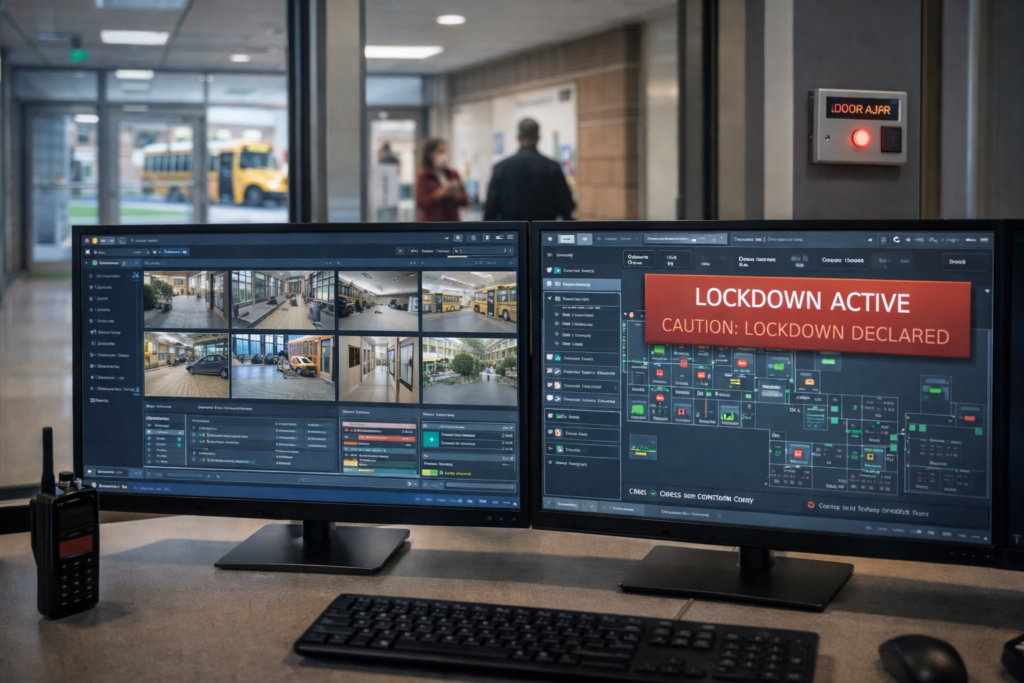
Security monitors show a lockdown alert with surveillance feeds.
Blogs

Evaluating School Security Software in Long Island Districts

School security software in Long Island is no longer a “nice to have.” It now sits at the center of how districts manage safety every day. When a door is propped open, a visitor walks in, or a hallway incident happens between periods, the software is what staff rely on to see what is happening, decide what to do, and act.

Many Long Island districts are feeling real pressure. Camera systems are aging. Buildings have been added on over time, with odd hallways, portables, and shared spaces. Families and staff expect clear, quick responses when something happens. At the same time, administrators are juggling tight budgets and limited time.

Security software has become the main screen that ties together cameras, door access, lockdown alerts, visitor sign-in, and reporting tools. It is where everything comes together in one place. Late winter and early spring are when many districts begin planning next year’s upgrades and ranking projects. From our work in schools across Long Island, our team at NCD Communications has seen how well-chosen software can make staff feel supported, and how a poor fit can slow them down when they need speed most.

Door ajar alert at school entrance, screen shows warning, yellow bus outside.
Blogs

K12 Door Ajar Alerts Schedules Bypass Rules and Escalations

A busy school day on Long Island can mean a lot of door activity. A side door might get propped open for a delivery, or students might hold a rear door during class change. If no one sees it, that door can stay open far longer than it should, which is a problem for any safety plan.

Door ajar alerts are meant to stop that gap. In simple terms, they are sensors on the doors and software in the background that tell staff when a door is open or unlocked longer than it is supposed to be. The goal is not to alarm every time a door moves, but to flag the situations that matter.

For Long Island K-12 districts, this is not a simple task. Many campuses have multiple buildings, older wings, trailers, or portables, and heavy traffic at arrival, dismissal, and after-school activities. A well-set-up door ajar system should help staff catch issues early, avoid constant nuisance beeps, and fit neatly into the district’s existing safety procedures.

We will walk through how to think about schedules, bypass rules, and escalation workflows so door ajar systems in Long Island schools support staff instead of overwhelming them.

Man in dark room monitors security footage on a computer screen, with a coffee cup and flashlight on the desk
Blogs

How to Use Remote Monitoring to Protect Empty K-12 Schools Over the Holidays

When the holiday season approaches, Long Island K-12 schools often go quiet. Around mid to late December, many school districts shut down for the winter break. While it can be a welcome break for staff and students, it leaves large school buildings sitting empty, sometimes for days or even longer. That silence can create the perfect gap for problems to sneak in. From power disruptions and burst pipes to attempted break-ins and vandalism, the risks don’t take time off just because people do.
That’s where remote monitoring systems can step in. With the right setup, it’s possible to keep eyes on the building, track changes, and catch warning signs early. You don’t have to be on-site to know what’s going on. These tools give you more control when the physical school is out of reach, helping you to stay one step ahead during a time when issues might otherwise go unnoticed.

Man in a dark jacket sits in a dimly lit control room, surrounded by multiple surveillance monitors, checking his phone
Blogs

Why Remote Monitoring Is Crucial After-Hours for NY Businesses

After hours, many New York businesses assume their space is safe simply because the last person locked the door. But silence doesn’t always mean security. When staff exit for the evening and offices, warehouses, or storefronts sit empty, those quiet hours can carry higher risk than most expect.

Remote monitoring systems give business owners and property managers a way to stay connected to their site without being onsite. Especially during colder months, when unexpected weather and delayed response times are common, having eyes on your building at all hours brings real peace of mind. Using what we’ve learned from working with Long Island and surrounding areas, we’ll explain why these systems matter most when buildings are quiet, not crowded.

A small black security camera is mounted on a purple wall, capturing a blurred room with a plant in the background.
Blogs

What Makes a Good Office Security System During Winter Months

Cold weather can add some pressure to any workplace, but when it comes to running or managing an office, it brings more than just a chill. Snow, ice, and freezing winds aren’t just inconvenient, they can create real risks for your staff, your building, and your security technology.

Office security systems need to hold up to more than a daily routine. They need to stay strong when winter hits hard. A system that works great in August might not cut it when December rolls in. That’s why planning for seasonal changes matters. From dealing with bad weather to keeping tabs on an empty building during the holidays, it helps to think ahead. Let’s break down what matters most when it comes to making your office security system work well through the coldest months.

A person in a blue shirt touches a wall-mounted touchscreen panel, interacting with smart home controls in a modern setting.
Blogs

What Schools Should Know Before Installing New Building Access Control

Schools across the country are looking into building access control as a way to keep people safe while simplifying daily routines. Whether you’re preparing for a new school year or making changes midyear, setting up a system like this takes more than just picking hardware. Many school leaders feel uncertain about what to ask or watch for before committing. As a Long Island-based provider of integrated security solutions, we design and implement card and badge access systems that help schools control who enters each facility and monitor access to restricted areas. When we work with schools, we often get the same early questions: What should we control? How hard will it be to manage? Will it actually work the way we need it to?

If you’re handling site security or operations for a school, knowing what to expect before installation can help avoid headaches later on. Getting the basics right sets you up for systems that serve your team, not slow it down.

Security footage shows a hooded figure walking on a cobblestone path at night
Blogs

Understanding Central Station Monitoring vs In-House Alerts

Every school depends on fast, reliable alerts when something goes wrong. Whether it is a fire alarm going off in the middle of the night or someone triggering a panic button at the front desk, how that alert is received and handled can make a big difference. Some schools use in-house teams to watch for those signals. Others rely on central station monitoring so someone is watching 24/7, no matter what. At NCD Communications, those monitoring options are designed to work alongside video surveillance, access control, and lockdown alarm systems for a more connected response.

We have worked with schools that only realized they needed extra support after a near miss or when a late-night issue was missed entirely. Choosing between in-house alerts and central station monitoring is not a one-size-fits-all decision. The right system depends on how your campus works, how often buildings stay open, and who is available to respond. Here is a clear look at what each system does and how to decide what will work best.

Blogs

Steps to Combine Surveillance and Access Control Without Downtime

Combining access control with surveillance makes it easier to manage school building safety throughout the day. Security system integration helps staff track who comes in, where they go, and when something looks off, all without waiting to check camera footage after the fact. When systems talk to each other in real time, the response can be faster, especially during emergencies.

But updates like this take planning. We’ve seen problems when schools jump in without a clear path. Cameras can go offline during install, or badge access systems stop syncing when software isn’t updated properly. These gaps, even for a few hours, cause confusion for staff and students. As a Long Island-based security provider with more than 25 years of experience working with schools, healthcare facilities, and commercial properties, we are a veteran-owned, licensed, and insured company founded in 1997 that provides end-user training and data collection for the systems we install. If you’re getting ready to bring your systems together, here are the steps we take to make sure it’s done without disrupting daily operations.