
Recognizing Gaps in Public School Lockdown Systems on Long Island
Why Lockdown Gaps Matter Before the Next School Year
Most Long Island school districts already have some kind of lockdown setup. There are written plans, drills, and technology in place. But having something on paper or bolted to a wall is not the same as having a system that actually works when people are stressed and the building is busy.
Real school life is messy. Bells are ringing, staff are out sick, substitutes are trying to learn names, and after-school groups are spread across gyms and fields. A public school lockdown system in Long Island has to work in all of those situations, not just in a calm first-period drill.
Late winter is when many districts start planning summer work. That makes this a good time to ask a simple question: where would our lockdown process fail if today’s drill were a real incident? In this article, we will walk through common gaps we see in Long Island schools and share practical steps to close them without pushing any one brand or product.
When “We Have a Plan” Is Not Enough
A written lockdown procedure is only one piece of the picture. A working system connects three things in a clear way: the technology, the communication paths, and the people using them. If any one of those is unclear, the whole chain weakens.
During site visits, our team often sees gaps like:
- Outdated floor plans in binders that no longer match rooms and doors
- Staff unsure which button, phone code, or panel to use to start a lockdown
- Different terms used in different buildings, which leads to hesitation and confusion
- Procedures that assume everyone is at their desk, phones work, and no one is outside
In one common type of drill, the main office successfully starts a lockdown, hallway classrooms respond well, but portable classrooms or a separate wing do not get the alert right away. That small delay exposes how a tiny break in communication can put people at risk.
Finding these weaknesses is not about blame. It is about lining up what we think will happen with what actually happens, long before a real emergency forces the truth on everyone.
Silent Failure Points in Lockdown Technology
Technology problems are often quiet until the moment you need the system. On a normal school day, everything seems fine. During drills, hidden issues show up.
We frequently see:
- Interior doors that stick or do not lock reliably from the inside
- Classroom speakers that do not reach loud spaces like cafeterias or gyms
- Older intercoms that cannot interrupt existing announcements or background audio
Network design can also create silent failure points:
- Lockdown buttons or panels tied to a single network switch with no backup path
- Security cameras on a network that the main office cannot see quickly in a crisis
- Wi-Fi gaps that prevent mobile alerts from reaching certain wings or modular units
Small setup details matter more than many people expect. A hallway camera pointed a few feet the wrong way can miss the key angle. A door controller that does not keep clear logs makes it hard to review what happened in a drill and where timing broke down.
Because these issues stay hidden during daily routines, schools need regular, honest testing and simple technical audits focused on, “Did every room get the message, and can we see what we need to see?” not just, “Does the light on the device turn on?”
Communication That Works Beyond the Main Office
In many districts, the main office has plenty of tools: phones, intercoms, camera screens, sometimes dedicated lockdown controls. The problem is what happens after those first seconds. Classroom teachers, substitutes, aides, cafeteria staff, custodians, coaches, and bus drivers all need clear instructions just as fast.
A strong public school lockdown system in Long Island uses more than one path at the same time, for example:
- Overhead paging that reaches classrooms, hallways, and shared spaces
- Classroom indicators or lights that show clear, simple status
- Mobile notifications for staff who are not near a speaker or are outside
- Visual cues for people with hearing or language barriers
Local realities make this harder. Many Long Island campuses have:
- Separate buildings for different grades or programs
- Modular and portable classrooms behind the main building
- Athletic fields, playgrounds, and large parking or bus loops
A lockdown that works only inside the main building is not enough. To see where communication actually reaches, districts can:
- Run at least one drill outside standard class periods
- Include after-school programs, clubs, and sports in testing
- Stand in fields, portables, and parking lots to check how fast the message comes through and if it is clear and understandable
These simple checks quickly show which areas need extra speakers, clearer signage, or another communication path.
Training, Turnover, and Everyday Usability
Even the best-designed system will fail if people are afraid to use it or not sure how it works. Staff turnover, new security guards, and rotating substitutes slowly erode confidence over time.
We see the most success when systems are:
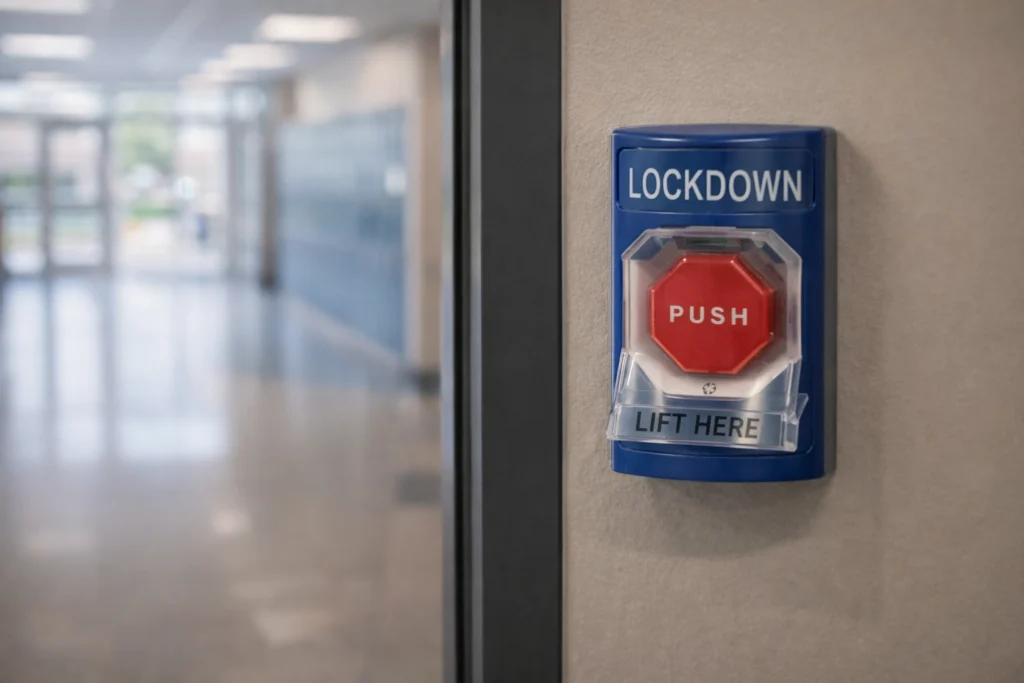
- Simple, with clearly labeled lockdown buttons or switches
- Consistent from building to building, so staff do not have to relearn controls
- Easy to understand at a glance, with camera views grouped the same way across screens
It also helps to build small, regular reminders into normal operations. That can look like:
- Short refreshers at staff meetings or during superintendent conference days
- Quick, focused practice on how to start and cancel a lockdown
- One-page printed guides posted in classrooms and offices near phones and doors
At NCD Communications, our team often helps schools re-label panels, clean up old instructions taped to walls, and simplify which paths alerts follow. The goal is to remove guesswork so that, in a stressful moment, no one is troubleshooting a panel or hunting for a code.
Turning Lockdown Gaps Into a Summer Work Plan
Late winter and spring are good times to turn concern into a clear, manageable plan. When buildings are less crowded in summer, districts can safely work on doors, wiring, intercoms, and network gear without disrupting learning.
A straightforward approach looks like this:
- Walk each campus with a simple checklist for doors, intercom coverage, cameras, and network reach
- Run one or two drills designed to stress test timing and communication paths, not just staff behavior
- Capture specific issues in writing, with short notes or photos so they are easy to share and prioritize
From there, districts can rank each item by risk and effort: what would cause the most harm if it failed, and how complex is it to fix? That list becomes the base for a summer work plan that fits budgets, staffing, and construction schedules.
An outside partner like NCD Communications can help review what is already in place, confirm what is still working well, and suggest practical improvements. Many gaps can be closed with better configuration, small equipment changes, or clearer labels, not by replacing everything. The strongest public school lockdown system in Long Island is the one that matches how your buildings actually run every day and is tested often enough that its weak spots do not stay hidden.
Protect Your School Community With Smart, Reliable Safety Technology
If you are evaluating options to safeguard your campus, our public school lockdown system in Long Island is designed to integrate seamlessly with your daily operations while improving response times in an emergency. At NCD Communications, we work closely with your administrators and security team to tailor a solution that matches your school’s layout, protocols, and budget. Reach out to contact us so we can review your current setup and help you build a safer learning environment.